
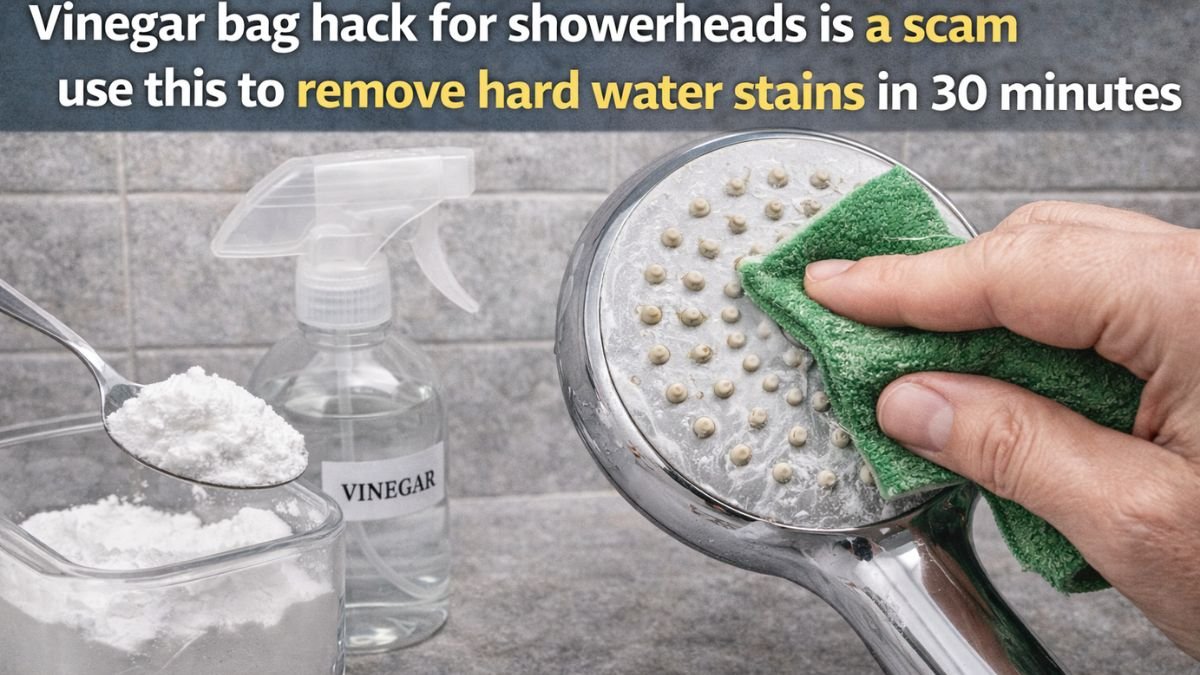
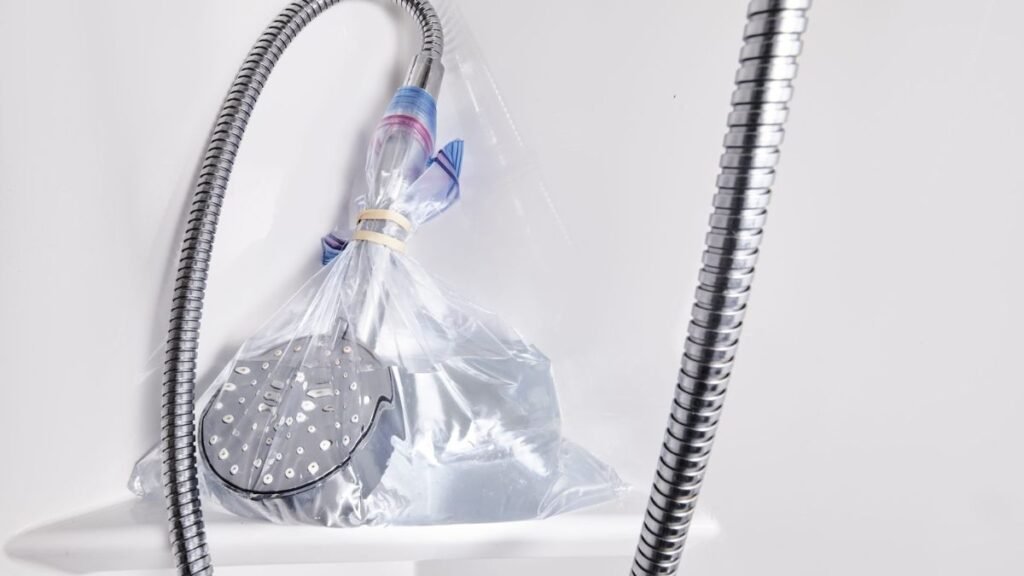
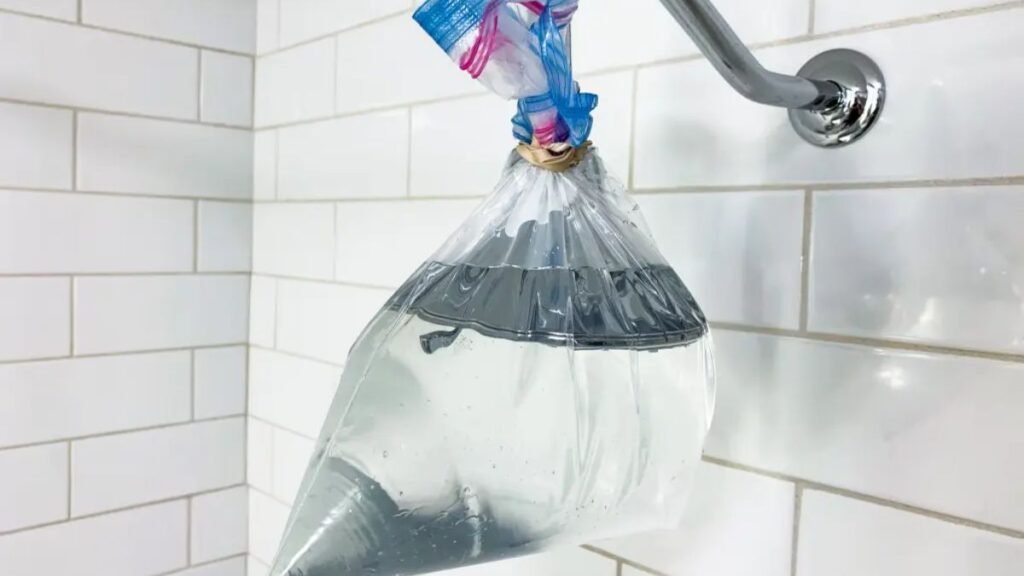
For years, the vinegar bag hack has been shared as a miracle solution for dirty showerheads. The idea is simple and visually convincing: fill a plastic bag with vinegar, tie it around the showerhead, leave it overnight, and wake up to sparkling nozzles. Social media videos, blogs, and cleaning forums have promoted it as cheap, natural, and effective. For people dealing with hard water stains, the hack feels almost too good to be true. Unfortunately, that feeling is often accurate.
Understanding Hard Water and Why Showerheads Suffer
Hard water contains high levels of minerals, mainly calcium and magnesium. When water flows through your showerhead day after day, these minerals slowly build up. Over time, they harden into limescale, clogging spray holes and leaving white or yellowish stains. This buildup doesn’t just look bad; it affects water pressure, spray pattern, and even hygiene. Any solution that truly works needs to dissolve or break down these mineral deposits, not just loosen surface grime.
Why the Vinegar Bag Hack Rarely Delivers Results
Vinegar is acidic, and in theory, acid can dissolve mineral deposits. The problem lies in how the hack is used. When vinegar sits passively in a bag, it doesn’t circulate or reach deep into clogged nozzles. Gravity keeps most of the liquid pooled at the bottom of the bag, meaning only part of the showerhead is properly exposed. In many cases, the vinegar becomes diluted by leftover water in the head, weakening its effect even more.
The Illusion of Clean After Using Vinegar
After removing the bag, many people notice a slight improvement and assume the hack worked. In reality, what they’re seeing is often just loosened surface residue. The deeper limescale that restricts water flow usually remains. Within days or weeks, stains return and water pressure drops again. This cycle leads people to repeat the hack, wasting time and vinegar without ever truly solving the problem.
Another Problem: Vinegar Can Damage Showerheads
Vinegar doesn’t just target mineral buildup. Prolonged exposure can damage rubber seals, silicone nozzles, and certain metal finishes. Chrome, brass, and nickel coatings may lose their shine or develop dull spots after repeated vinegar soaks. For modern showerheads with mixed materials, the vinegar bag hack can quietly shorten the lifespan of the fixture.
Why a Faster, Smarter Solution Is Needed
Most people don’t want to leave a bag tied to their shower overnight or risk damage to expensive fixtures. They want something quick, reliable, and safe. The good news is that removing hard water stains doesn’t have to be complicated or aggressive. With the right approach, you can fully clean a showerhead in just 30 minutes, without gimmicks or guesswork.
The 30-Minute Method That Actually Works
The most effective way to remove hard water stains is to combine controlled soaking with gentle mechanical action. Instead of hanging a bag and hoping for the best, this method focuses on direct contact and circulation. Start by removing the showerhead if possible. Most models twist off easily by hand or with a cloth and wrench. This step alone makes a huge difference because it allows full access to the problem areas.
Why Removing the Showerhead Matters
When the showerhead is off, the cleaning solution can reach every nozzle evenly. There’s no gravity working against you, and no dilution from trapped water. You can also inspect the extent of the buildup, which helps you understand whether the issue is light staining or serious limescale blockage. This awareness is key to long-term maintenance.
Choosing the Right Cleaning Solution
Instead of plain vinegar, a citric-acid-based descaler or a diluted citric acid solution works far better. Citric acid is stronger against mineral deposits but gentler on metals and rubber components. When dissolved in warm water, it actively breaks down calcium and magnesium without harsh fumes or surface damage. This balance is what makes the 30-minute method so effective.
How the Soaking Process Works
Place the showerhead in a bowl or container filled with warm water and the citric acid solution. Make sure it’s fully submerged so all nozzles are exposed. As the solution works, you’ll often see small bubbles forming. This reaction is the acid breaking down mineral buildup. Unlike the vinegar bag hack, this process is consistent and thorough from start to finish.
The Importance of Gentle Agitation
After about 20 minutes, gently shake or swirl the showerhead in the solution. This movement helps dislodge loosened limescale from inside the spray holes. You’re not scrubbing aggressively; you’re encouraging the solution to circulate where buildup tends to hide. This step is crucial and is completely missing from the vinegar bag approach.
Final Rinse and Immediate Results
After 30 minutes, remove the showerhead and rinse it thoroughly under clean water. You’ll often notice an immediate difference. Spray holes look clearer, stains are gone or dramatically reduced, and water flows freely again. When you reattach the showerhead and turn it on, the improved pressure and even spray pattern are usually obvious right away.
Why This Method Outperforms the Vinegar Bag Hack
The success of this method comes down to control and chemistry. You control the concentration of the solution, ensure full contact with all surfaces, and actively help remove buildup through gentle motion. The vinegar bag hack relies on hope and time, while this approach relies on proven reactions and direct access.
Addressing Stubborn Buildup Without Damage
For showerheads with extreme limescale, a soft toothbrush can be used after soaking to gently clean remaining residue. Because the minerals have already been weakened, very little pressure is needed. This minimizes the risk of scratching or damaging finishes, something that aggressive scrubbing after vinegar soaking often causes.
Preventing Hard Water Stains from Returning
Cleaning once is only part of the solution. To keep your showerhead in good condition, regular light maintenance is key. Rinsing the showerhead with hot water after heavy use and drying it occasionally can slow mineral buildup. Periodic 10-minute soaks every few months are far more effective than emergency overnight vinegar bags.
The Psychological Appeal of Cleaning Hacks
The vinegar bag hack spread because it looks clever and easy. There’s something satisfying about tying a bag and walking away. But effective cleaning usually requires intention, not tricks. Understanding why something works gives better results than copying viral hacks without questioning them.
Saving Time, Money, and Frustration
While vinegar is cheap, repeating ineffective methods costs time and energy. The 30-minute method saves you from ongoing frustration, reduces wear on your showerhead, and delivers consistent results. In the long run, it’s more economical because it prevents premature replacement of fixtures damaged by harsh or prolonged treatments.
A Cleaner Shower Without the Gimmicks
Hard water stains are a common problem, but they don’t require extreme measures or viral tricks. By ditching the vinegar bag hack and using a focused, science-backed approach, you can restore your showerhead quickly and safely. Clean water flow, better pressure, and a spotless appearance are achievable in just 30 minutes, no scams required.