

Kitchen items often bear witness to our habits. Even a lemon sometimes just lies in a bowl—slowly shrinking, as if waiting to prove its worth. That day, something similar happened. Vegetables were simmering on the stove, my phone was constantly ringing with messages, and I needed to quickly prepare a salad dressing. I picked up a lemon, cut it in half, and squeezed it with all my strength. The result? Barely a few drops.
For a moment, I thought I might have to get another lemon. Then I remembered a simple piece of advice I’d heard: “Microwave the lemon first.”
Without much thought, I placed the entire lemon on a plate and microwaved it for about 20 seconds. A soft sound and the aroma of fresh citrus spread throughout the kitchen. When I cut and squeezed it again, the juice flowed down to my fingers. The same lemon, but the experience was completely different.
Small changes, big differences.
Why a Microwaved Lemon? Is a Mini-Kitchen Superpower
Sometimes, a kitchen solution comes along that sounds simple but proves incredibly effective. Microwaving a lemon is one such solution. It’s no magic trick, but a simple one—heat loosens the fibers inside the fruit, allowing the juice to flow more easily.
Often, cold or slightly aged lemons feel hard. Squeezing them can tire your fingers and yield very little juice. Often, you have to use two or three lemons for a single recipe. But when the same lemon is gently heated, its texture softens, and the juice flows more quickly.
In fact, the lemon contains tiny juice-filled sacs. These sacs remain hard in the cold. Gentle heat loosens them. The result—less effort, more juice. And that’s when this simple trick feels like a “kitchen secret.”
[also_read id=”2620″]
The Right Way: How to Microwave a Lemon Without Mistakes
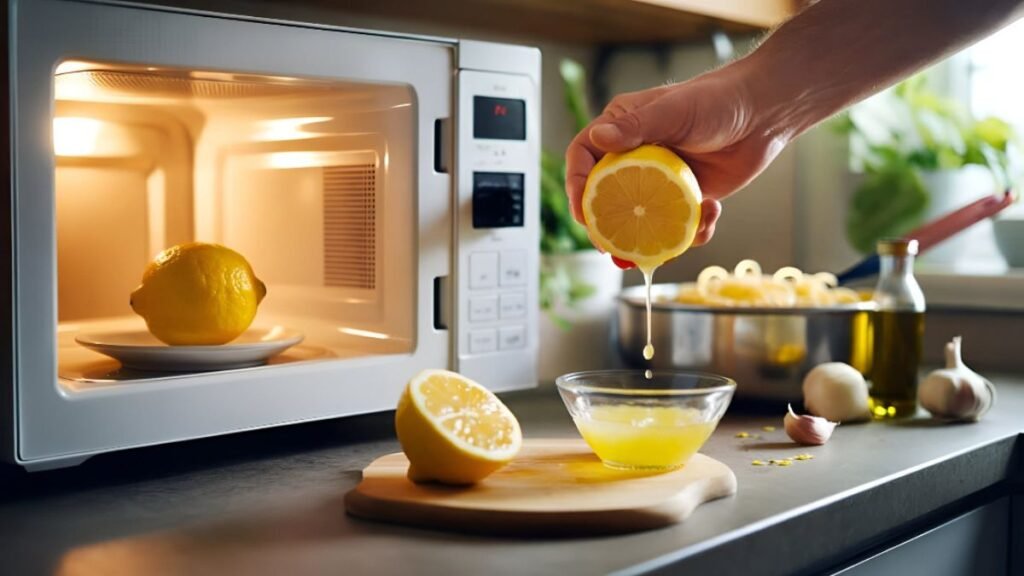
This process is incredibly simple, but it’s important to keep the timing right.
First, take a whole, uncut lemon. If it’s fresh from the refrigerator, it’ll take a little longer, and if it’s at room temperature, a shorter time will suffice.
How to:
- Place the lemon on a microwave-safe plate.
- Room-temperature lemon: 15–20 seconds.
- Lemon fresh from the refrigerator: 25–30 seconds.
- Take it out and squeeze it with your hand—it shouldn’t be hot, just slightly warm.
- Roll it on the counter with your palm.
- Then cut it and squeeze it.
You’ll immediately notice the difference. The juice will flow smoothly, not drip.
What to Avoid
- Do not microwave for too long. Heating for more than a minute can cause the peel to burst and the taste to become slightly bitter.
- Do not microwave a cut lemon. This can cause the juice to cook away at the edges and reduce its freshness.
- Always remember the “warm” rule—not hot.
How This Little Trick Changes Your Habits
We often avoid adding fresh lemon due to minor inconveniences. Salads lose a little tang, tea lacks its freshness, or grilled vegetables taste a little bland. But when lemons become easier to squeeze, they become easier to use. That’s the real change.
This trick not only increases the amount of juice but also reduces food waste. If you get enough juice from one lemon, you don’t need another. This saves money and brings satisfaction.
The beauty of a kitchen lies not in big changes, but in small improvements like these.
[also_read id=”2623″]
Benefits at a Glance
| Key Point | Details | Value for You |
|---|---|---|
| Softens the Lemon | 15–30 seconds in the microwave relaxes the internal fibers | More juice with less effort |
| Gentle Warmth is Important | Warm, not hot | Maintains fresh flavor |
| Roll Before Cutting | Press and roll with your palm before slicing | Extracts maximum juice |
| Reduces Waste | Use one lemon completely | Saves money and ingredients |
Small Kitchen Changes, Big Experiences
When a task becomes easier, we do it more often. Microwaved lemons provide this convenience. Now, adding fresh juice to salads doesn’t seem like a hassle, nor does squeezing lemons into tea seem like a hassle.
The next time you find a hard lemon that doesn’t yield juice easily, just give it a few seconds of heat. It’s possible that a simple lemon will add a new spark to your food.