
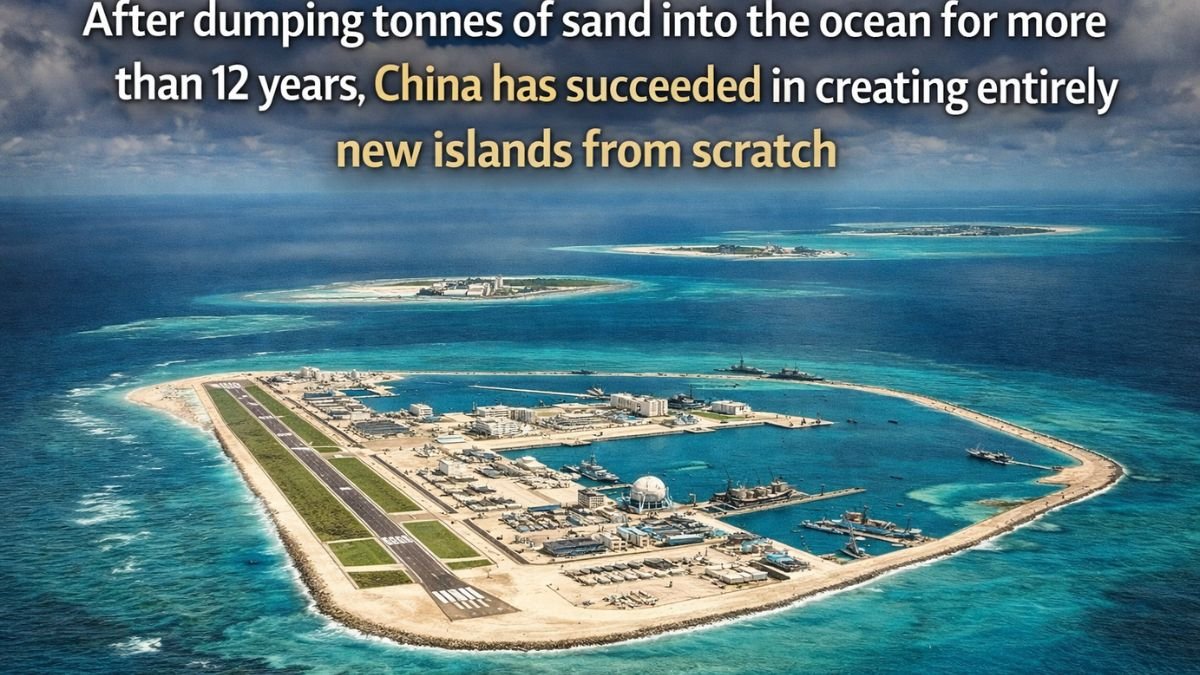
For more than a decade, a bold and controversial transformation has been unfolding far from city skylines and highways. After dumping tonnes of sand into the ocean for over 12 years, China has succeeded in creating entirely new islands from scratch. What once appeared to be endless stretches of open water have slowly evolved into solid landmasses, reshaping maps, maritime routes, and global conversations. This story is not just about engineering ambition but about how modern nations push the boundaries of what is physically possible in the natural world.
How the Idea of Building Islands Took Shape
The concept of creating land where none existed is not new. Ancient civilizations reclaimed coastlines using rudimentary tools, but China’s approach represents an entirely different scale. Over the last 12 years, massive dredging vessels have scooped sand from the seabed and deposited it layer by layer into shallow waters. Gradually, these submerged foundations rose above sea level, forming stable platforms capable of supporting infrastructure, runways, and buildings. This process demanded long-term planning, enormous resources, and technological precision rarely seen before.
The Role of the South China Sea in the Project
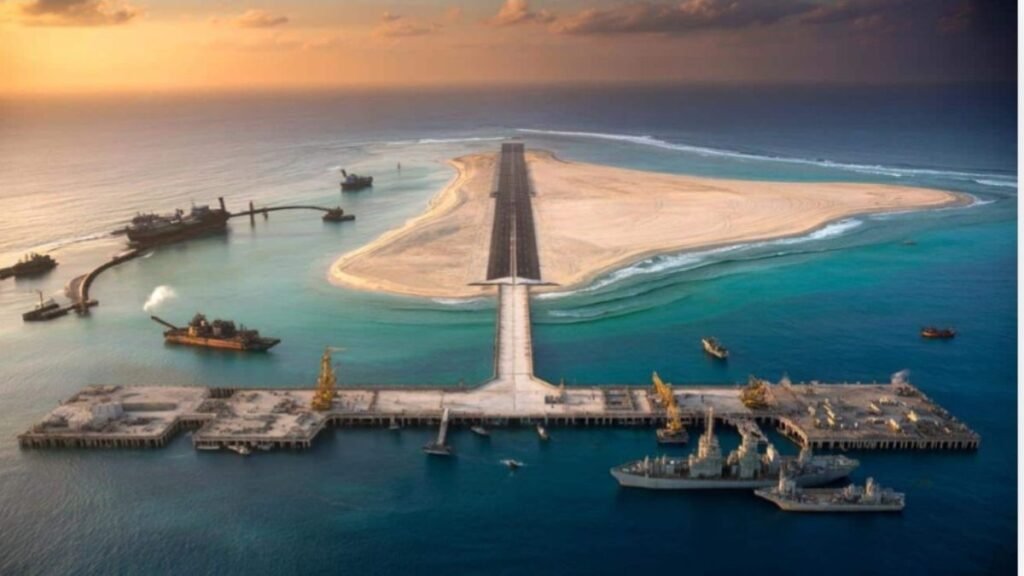
Much of this island-building effort has taken place in the South China Sea, a region already rich in history, trade routes, and geopolitical significance. The waters here are relatively shallow in many areas, making them suitable for large-scale land reclamation. Over time, previously uninhabited reefs and submerged features were expanded into visible islands. These developments have permanently altered the seascape, turning what were once navigational hazards into fixed landforms.
Engineering at an Unprecedented Scale
Creating islands from scratch is far more complex than simply pouring sand into the sea. Engineers had to ensure that the newly formed land could withstand waves, storms, and shifting currents. Layers of sand were compacted, reinforced, and stabilized using advanced techniques. Protective sea walls were built to prevent erosion, while drainage systems were installed to manage water flow. Every stage required continuous monitoring, as even small errors could cause sections of land to collapse back into the ocean.
Time, Patience, and Persistence Over 12 Years
One of the most striking aspects of this project is its duration. Over 12 years of continuous work reflects patience and persistence on a national scale. Progress was not always visible from one year to the next, but satellite images gradually revealed the dramatic changes. What began as faint outlines beneath the water eventually turned into fully formed islands. This slow but steady evolution highlights how long-term vision can reshape geography itself.
Environmental Questions and Global Concerns
The creation of artificial islands has raised serious environmental concerns worldwide. Dumping tonnes of sand disrupts marine ecosystems, affecting coral reefs, fish populations, and water quality. Scientists warn that dredging can permanently damage underwater habitats that take centuries to recover. While China has emphasized technological safeguards, critics argue that the environmental cost remains significant. These concerns have sparked debates about the balance between development and conservation in fragile ocean environments.
Strategic and Economic Implications
Beyond engineering and environmental debates, the new islands carry enormous strategic importance. Artificial islands can support ports, airstrips, and research facilities, extending a nation’s presence far beyond its mainland. Economically, they can influence shipping lanes, fisheries, and access to natural resources. For China, these islands represent both opportunity and leverage, reinforcing its role as a major maritime power in the region.
International Reactions and Diplomatic Tensions
The rapid transformation of open sea into land has not gone unnoticed. Neighboring countries and global powers have expressed concern over the long-term implications of artificial islands. Diplomatic discussions, legal challenges, and international forums have all addressed the issue. While China maintains that its actions are lawful and strategic, critics argue that such projects risk escalating regional tensions. The islands have become symbols of broader debates about sovereignty and international maritime law.
Life on Newly Created Land
Despite the controversy, life has begun to take shape on some of these newly formed islands. Structures have been built, equipment installed, and personnel stationed. What was once empty sea now hosts activity and human presence. These developments illustrate how artificial land can quickly transition from an engineering project to a functioning environment, complete with logistics, utilities, and long-term planning.
The Technology Behind Sand Dredging
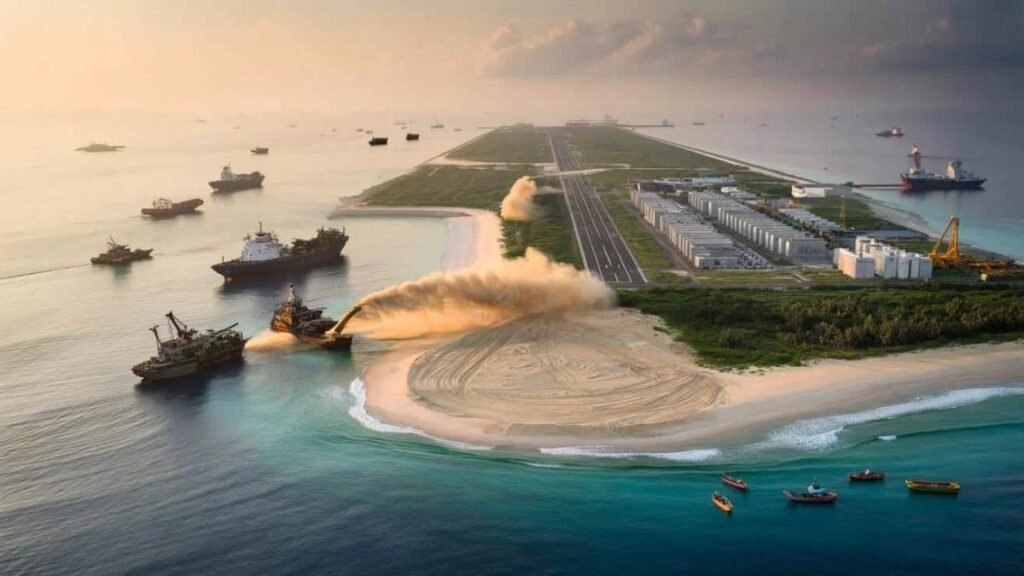
At the heart of this transformation lies advanced dredging technology. Specialized ships extract sand from the ocean floor and transport it to designated sites. Precision navigation ensures accurate placement, while real-time monitoring tracks stability and environmental impact. Over the years, improvements in machinery have increased efficiency, allowing larger volumes of sand to be moved with greater control. This technology has played a crucial role in turning ambitious plans into reality.
Comparing China’s Efforts With Global Projects
While other countries have engaged in land reclamation, the scale of China’s island creation stands apart. Projects in places like the Netherlands or parts of Southeast Asia often focus on coastal protection or urban expansion. China’s artificial islands, however, are built far from the mainland, in open sea. This distinction makes the achievement both more complex and more controversial, placing it in a category of its own.
Long-Term Stability and Maintenance Challenges
Building an island is only the beginning. Maintaining it over decades presents ongoing challenges. Sea-level rise, climate change, and stronger storms threaten the stability of artificial land. Continuous reinforcement, monitoring, and adaptation are necessary to prevent erosion and flooding. The success of China’s islands will ultimately depend on how well they can endure these long-term environmental pressures.
Symbolism of Human Ambition Over Nature
The creation of entirely new islands from scratch symbolizes humanity’s growing ability to reshape the planet. For supporters, it represents innovation, determination, and national progress. For critics, it serves as a reminder of how fragile natural systems can be when confronted with large-scale engineering. The project stands at the intersection of ambition and responsibility, forcing the world to reflect on how far development should go.
Lessons for the Future of Coastal Engineering
China’s 12-year effort offers valuable lessons for future coastal and marine engineering projects. It demonstrates what is possible with sustained investment, advanced technology, and long-term planning. At the same time, it underscores the importance of environmental assessments and international cooperation. As more nations face rising seas and limited land, the debate over artificial islands is likely to intensify.
A New Chapter in Human-Made Geography
After dumping tonnes of sand into the ocean for more than 12 years, China has undeniably changed the physical and political landscape of the sea. Entirely new islands now exist where waves once rolled freely. Whether viewed as an engineering triumph or a source of global concern, these islands mark a new chapter in human-made geography. They stand as lasting evidence of how determination, technology, and time can transform even the most untouchable parts of the natural world.